WHY DOES TODAY’S FASHION INDUSTRY FEEL LIKE MUSICAL CHAIRS?
- Ela Casati

- 17 oct 2024
- 3 min de lectura
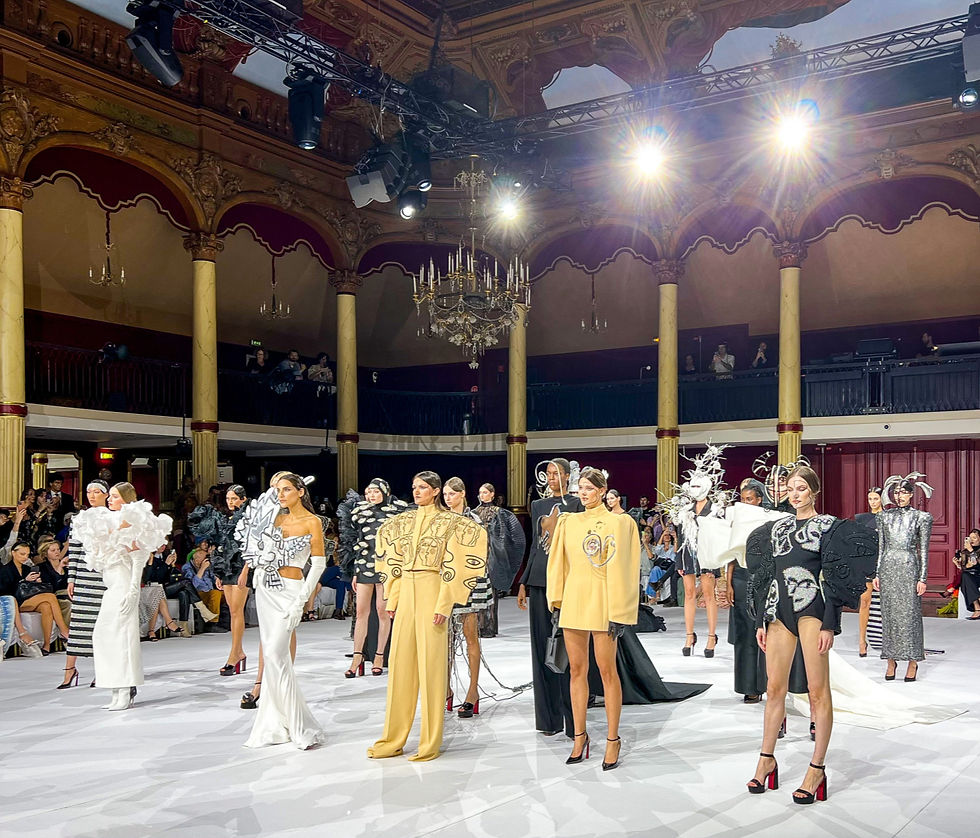
Paris Haute Couture Week. Image: Sortir á Paris.
This year in fashion has been remarkably uncertain when it comes to the future of many of the most important fashion houses. Starting with Virginie Viard’s exit from the creative director position at Chanel, as well as other resignations (Hedi Slimane from Céline, Pierpaolo Picciolo from Valentino), transfers (Sarah Burton from Alexander McQueen to Givenchy, Haider Ackerman to Tom Ford) and innovative talents taking over the creative leadership of firmly established brands (Seán McGirr at Alexander McQueen, Peter Copping at Lanvin), it is not entirely clear yet if we are watching a renewal in the industry, or if it’s just an endless musical chairs game among the same creators during recent years.

One of Seán McGirr's looks for Alexander McQueen SS25. Image: Daniele Oberrach for Vogue Runway.
When the main maisons, for whatever reason, see themselves in need of a new creative director, their decisions are rarely free of criticism, especially in the case of iconic brands with well defined aesthetics. Even after decades of working as Karl Lagerfeld’s second-in-command, Virginie Viard was incessantly questioned throughout the years she directed Chanel. Alexander McQueen’s latest collection, which is Seán McGirr’s second at the label, garnered mixed reviews, as there were many who thought he understood its classic codes and references, and also many who considered that he hasn’t presented a real McQueen collection so far.

Jennie Kim closing Jacquemus' 15th anniversary show, "La Casa", in Capri, Italy. Image: courtesy of Jacquemus.
On the other hand, it does seem like the highest creative leadership positions in the industry are almost always given to the same couple of people. Sarah Burton’s transfer to Givenchy and Haider Ackermann’s to Tom Ford, as well as the rumored comeback of John Galliano to Dior and the possibility of Chanel choosing Simon Porte Jacquemus as their new design leader, leave audiences feeling that there is very little, if any, space for relatively new creators in the higher ranks of the industry.
Beyond deciding if a new designer is or isn’t “good enough” for a legendary brand, a more thought-provoking question would be:
Is it necessary to carry on with a brand when its original creator is no longer a part of it? If new creators in highly coveted positions haven’t been up to the task of doing an adequate interpretation of their predecessors, wouldn’t it be more fair to judge them according to their original work and in their own independent brands?
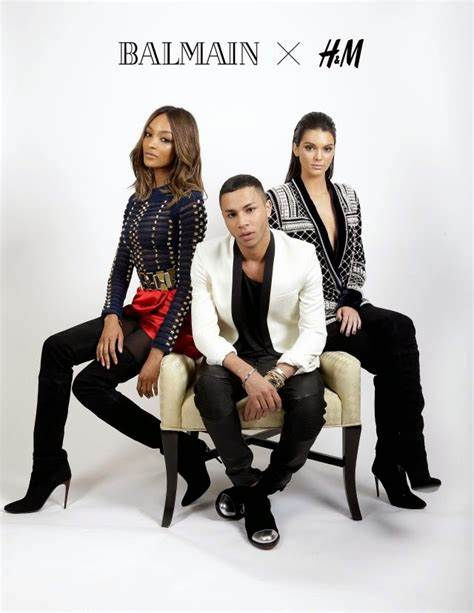
Olivier Rousteing, who was chosen as Balmain's creative director at the age of 25, has been credited with renewing the brand with his aesthetic codes and his star-studded social circle, including Jourdan Dunn (left) and Kendall Jenner (right). Image: courtesy of H&M.
While it is true that the right designer can renew an older brand and elevate it to new commercial and artistic levels (with successful cases like Jeremy Scott at Moschino and Olivier Rousteing at Balmain), there can’t be a true renovation cycle in fashion if all media attention and financial investments are focused on brands backed by LVMH, Kering, Richemont and similar luxury conglomerates. For an independent creator, it is both an exposure and a survival matter to be able to work for these labels, but their creativity might be constrained by the high level of exigence implied in having to adhere to the codes and standards of said labels. In such cases, the designers frequently find themselves between a rock and a hard place, thus it is just natural to not be able to make audiences, critics and investors all happy. In fact, achieving all of that simultaneously rarely happens.
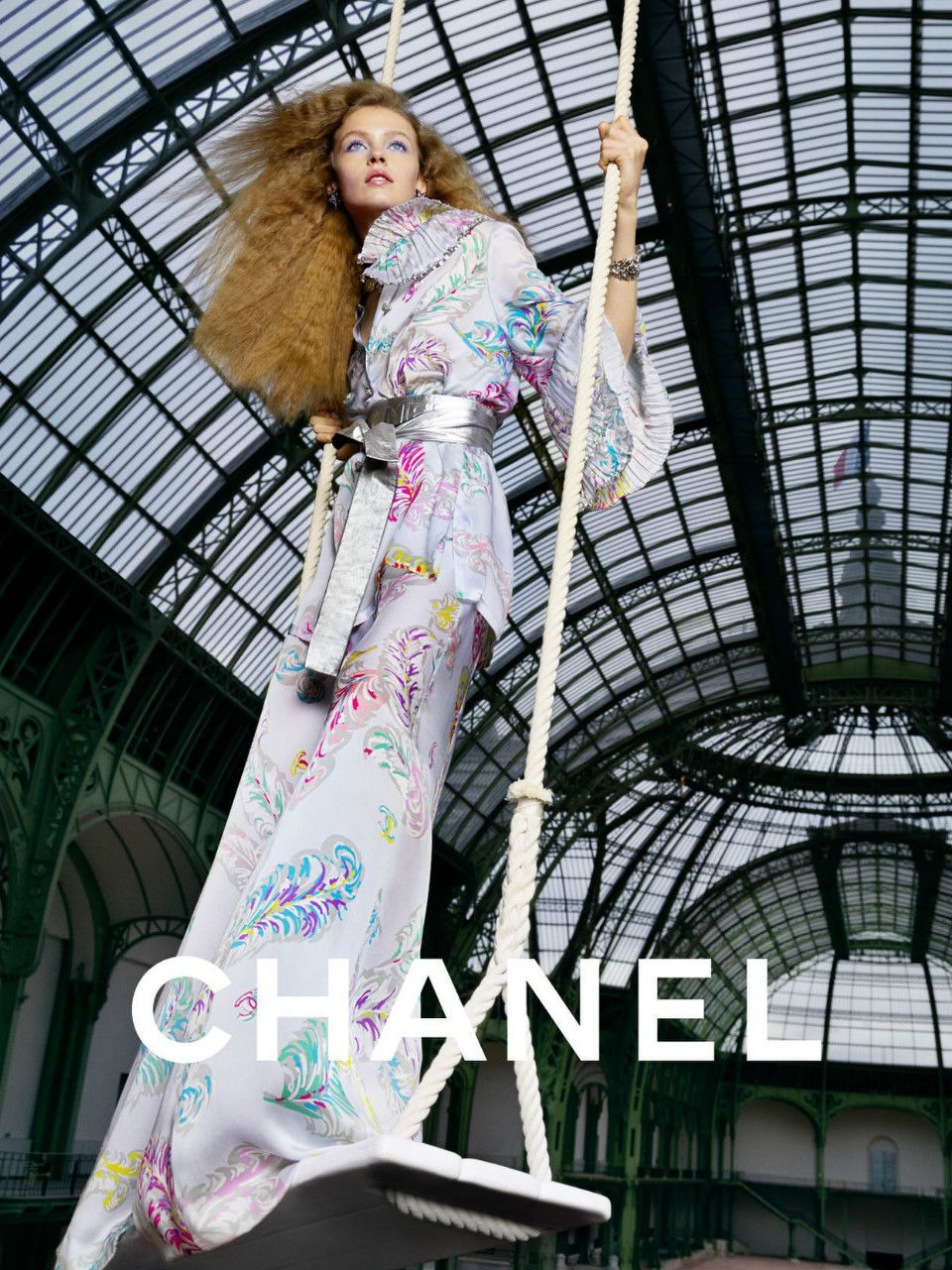
Since Virginie Viard's resignation on june 2024, Chanel's collections have been created by their anonymous design team. Above, part of the lookbook for Chanel SS25. Image: Inez & Vinoodh for Chanel.
In fashion, these types of issues require increasingly fast solutions, but they might not always be the best. Probably this is why Chanel has taken a suspiciously long time for industry standards to decide who will be their new creative director and left their latest collection in charge of a nameless, faceless design team.
Dare I say, to stop attaching the brand’s name to the designer’s might be a more worthwhile solution in commercial and critical terms than that of forcing designers with their own aesthetic universe to adapt into iconic brands, almost never having confidence in such creators’ ability to complete such mission successfully. Fashion is fleeting by nature, but its consequences over the people who make it aren’t, and it may be a good time to think about them in different terms.


Comentarios