KEY TAKEAWAYS FROM TOKYO FASHION WEEK SS25: PART THREE
- Ela Casati

- 28 sept 2024
- 3 min de lectura

All images used in this article are a courtesy of Rakuten Tokyo Fashion Week.
WISHARAWISH


One of the international brands that prove the effort of TFW’s organization in cementing the Japanese capital as the most important fashion hub in Asia. Wisharawish is Thai designer Wisharawish Akarantisook’s brainchild, who has received global recognition with accolades like the first place at Mango Fashion Awards, and remarkable participations in events such as the Bangkok Elle Fashion Week, and the Fashion Festival of Hyères, France.


Wisharawish’s SS25 collection was mostly black and white, with some pearl grey, dark lavender and metallic earthy tones. As it happened with other collections during this event, it had an abundance of oversized looks and sheer fabrics, but with Wisharawish such details coexisted with apparently mismatched prints in looks that mixed paisley and gingham, or floral tops with geometric patterned pants. The concept of putting together opposite motifs was smartly executed through the harmonization of all cuts and color palettes involved. There was also a healthy balance of femenine and masculine looks, as well as styling choices that suggested that these clothes can be worn in both formal environments and more relaxed occasions.


YUEQI QI


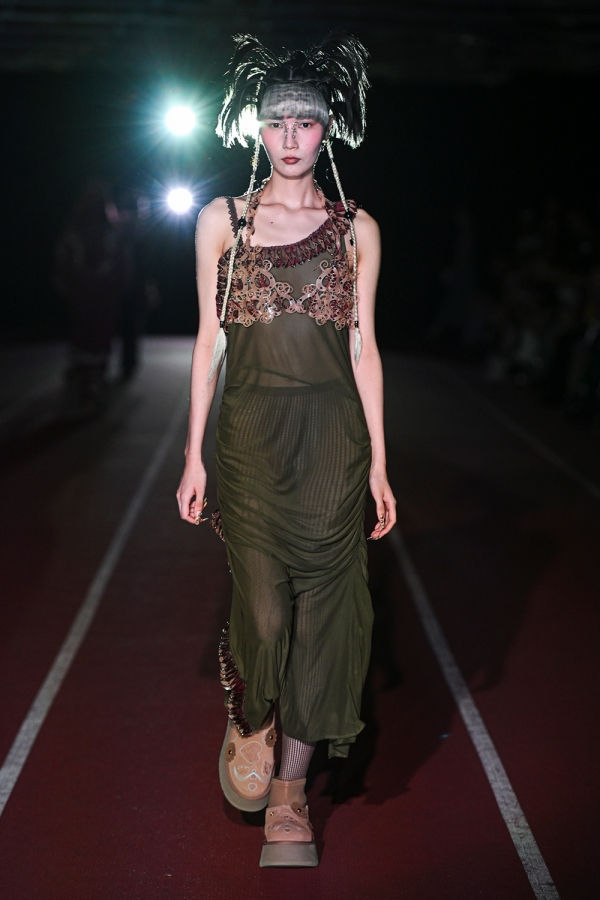
This Chinese designer, with an impressive CV that includes a degree from Central Saint Martins, a stint at Chanel’s atelier and being a finalist on the 2022 LVMH Prize competition, has the cornerstone of her brand on the traditional embroidery techniques of her home country. With a fun, futuristic perspective, the originality of her designs has garnered a cult following in Asian markets, also making her one of the favorite of some of the biggest celebrities in the region, including Japanese supermodel Kiko Mizuhara, Blackpink member Lisa and idol group XG.


Falling in line with the brand’s consistently urban and uncomplicated nature, this SS25 collection had an undeniable influence of the coolest athleisure: from the venue chosen for the runway show (Japan National Stadium in central Shinjuku) to the collaboration with Adidas that resulted in tracksuits turned into miniskirts and equally short dresses. Yueqi Qi’s trademark embroidery was expressed in different ways through all the garments: denim mixed with lace, macramé headpieces, tops with wool and plastic beads, sheer fabrics with printed fringes. A collection with impeccable technical execution that met all the standards of the hottest streetwear brands and definitely viral qualities.


SULVAM


Teppei Fujita’s brand, with multiple participations on Tokyo Fashion Week and a recent significant advancement in the European market through their Paris branch, showcased a collection with a pronounced international focus while staying true to its DNA. Two common themes throughout the collection were striped fabrics (both horizontal and vertical), paisley prints and a mix of crisp white and vibrant red.


SULVAM offered a deconstructed interpretation of traditional smoking suits (ahead of YSL’s latest show that included a revival of this classic silhouette), sheer fabrics and fishnets, and some references to punk aesthetics through worn out stripped wool sweaters, ripped and with strategically open zippers. In this collection formality and rebellion matched in harmony for an impossibly cool universe, that was also easy to understand for more mainstream audiences.


MURRAL
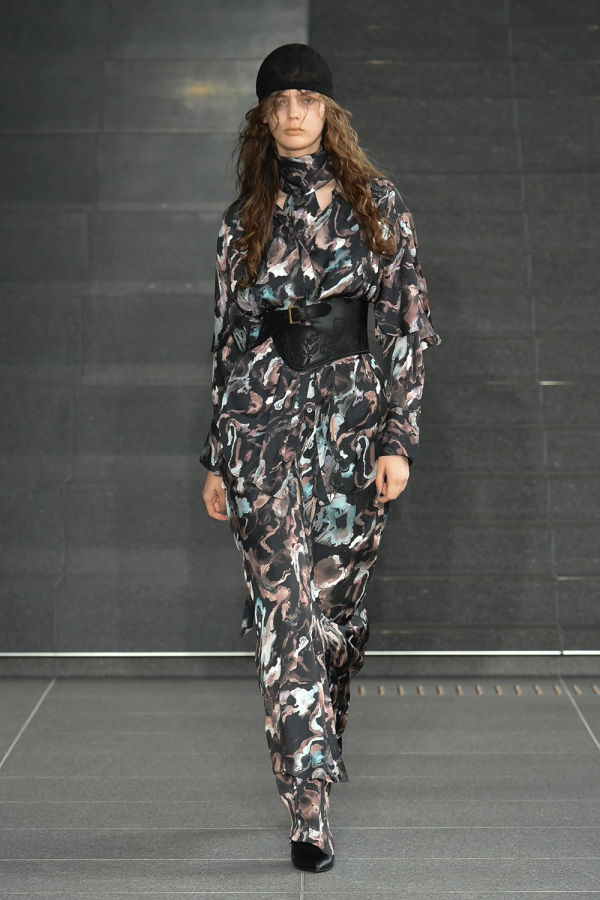
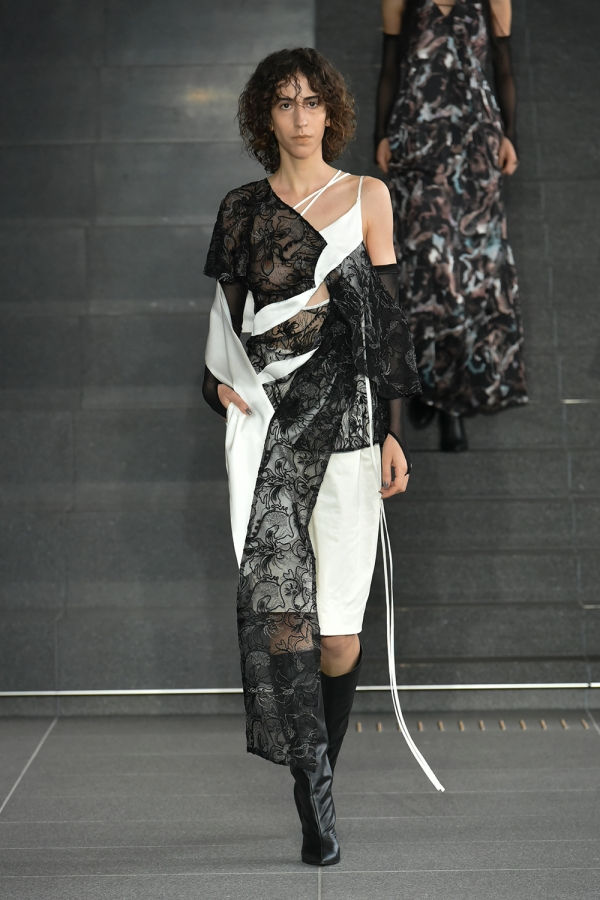
One of the last fashion houses to showcase during this Tokyo Fashion Week, and a personal favorite, presented their latest collection, for a grand total of eight participations on this event. MURRAL’s universe is femenine, soft and free-spirited, and, in a way, is a more palatable interpretation of contemporary Japanese fashion design, with firm roots in the groundbreaking aesthetics of 80s pioneers such as Rei Kawakubo y Yohji Yamamoto, but with more diverse color schemes and easier to get for today’s female demographic.


Floral motifs and lace are staples of this brand, along with pastel and muted hues, but this time there were more monochrome looks in white, black, magenta and aqua green. Also, leather accessories were seen multiple times on the runway, which is a rare occurrence for MURRAL. Asymmetrical prints, another trademark feature of the brand, were frequently used in this collection, as expected considering their mastery in creating exquisite patterns over different fabrics.


Aside from the fact that my favorite look in all of TFW SS25 (a sleeveless long dress in aqua green with gold and magenta printed strokes) was a part of this collection, the execution was excellent and kept a healthy balance of the artistic and the commercial side of fashion, making it a must see for Japanese fashion enthusiasts.


Comentarios